Wednesday, December 5, 2012

The Adventure of Crewing Aboard Sindbad

Having just passed the half way point of my two months aboard Sindbad, the time was right to sit down and share some reflections. Living on a ship is completely new for me and so far it has been a life enhancing experience, the only problem is that the time is slipping away too quickly!

I joined Doug and Bethanne in Grenada in mid-Oct and we spent a pleasant couple weeks making our way up to Bequia and the Grenadines for the start of their second around the world adventure.

I really enjoyed the friendly locals and beautiful scenery of Grenada, Union, and Bequia. Life moves at a different pace in such places and we had many opportunities to go ashore and meet and chat with the local people.

From Bequia we headed West into the sunset for the islands of Bonaire and Curacao. The Antilles had a different feel from the islands we had just come from and were far more developed and industrial. Before arriving in Curacao we stopped in Klein Curacao, a lovely little island complete with thatch-roof huts, a ship wreck, and and old abandoned lighthouse. The clear waters made for good snorkelling too.

After 12 days in Curacao, we were itching for a change of scenery. By that time, Chris Reed, a relative from Colorado, had come aboard to crew for a couple weeks so the four of us waved goodbye and motored on westward towards Cartegena, Colombia.

If I thought Curacao was developed I was in for a shock pulling into the anchorage in Cartegena Bay, flanked by a massive shipping dock on one side and a Miami Beachesque skyline on the other.

A real nice schooner Alessandra against the high-rise backdrop

We have now been in Cartegena for over a week and have spent our days wandering through the old part of the city, discovering the market places and taking part in the timeless Spanish tradition of the afternoon nap - a much safer alternative for beating the heat than swimming in the brown water.

Me, Doug and Chris discovering the old city
San Pedro church in the heart of the old city
I was able to take a quick two day trip up to Santa Marta, a sea side town in the North of Colombia which was a good launching point to visit Tayrona National Park.

We often had to make way for horses along the trail
Typical beach in Tayrona National Park

Everyday aboard has been a learning experience and keeping an 80+ year old ship in top-notch condition doesn't happen by magic - it requires constant hardwork and maintenance. Captain Douglas 'Crunch' Hazelton always takes the time to explain every aspect of the ship and the work that needs to be done, from scrubbing the deck to painting the anchor with tar apoxy to blasting away rust with a needle gun - it all has to get done.

The hard working crew
Working slightly harder raising the mizzen sail

On a night watch in the wheelhouse (notice the little cat YingYang keeping me company)

Being aboard Sindbad is about living in the moment: feeling the excitement as we pull into an exotic new locale, enjoying a peaceful moment with a good book surrounded by endless miles of ocean, or immersing ourselves in great conversations about life, dreams, and adventures ahead.

Enjoying a nice meal in an old wine cellar

I would highly recommend joining Doug and Bethanne on Sindbad to anyone with a sense of adventure looking to discover the world.

Thursday, November 8, 2012

Sailing the Caribbean - Grenada to Curacao

On October 14 I left Costa Rica and flew to St. Georges, Grenada to meet Doug and Bethanne Hazelton.  After a much needed rum, late in the evening I stepped aboard the ship 'Sindbad' for the start of an eight-week voyage through the Caribbean.

Sindbad is a very unique gaff-rigged ketch motor-sailing vessel that was built in Holland over 80 years old.  Doug and Bethanne live aboard the ship and raised their kids on it during their first trip around the world...which took 10 years!  For more on the ship and their adventures ahead (or if you want to join them in some exotic locale check out: www.sindbadadadventure.com).

Sindbad anchored off of the tiny island of Klein Curacao

The first days were spent in Grenada, with its friendly locals, bustling markets, and lush green hillsides.  Bethanne and I found time for a hike to a waterfall in between shopping for fresh local fruit like sugar apples, soursop, and papaya.  A stop by the local fish market was a must when we were in town too.

Drinking fresh coconut water sold on the roadside in St. Vincent with Bethanne

From Grenada we travelled to Carriacou and the Tobago Cays.  Just a few minutes in the turquoise water revealed an abundance of marine life, including parrot fish, barracuda, sea turtles, a nurse shark, and more.  The highlight here was an evening sail in the small boat around the reef with a rum in hand.

Bequia and St. Vincent were the last stops before the start of the official start of Doug and Bethanne's second circumnavigation around the world (and my journey with them to the San Blas Islands, Panama).  Three days motor-sailing west brought us to Bonaire, part of the Netherlands Antilles, then Curacao (can't figure out the funny accent that is supposed to be under the second 'C' on this keyboard!).

The view of the local bar in the Tobago Cays from the bow
Green Turtle hanging around Klein Curacao

Shipwreck off the coast of Klein Curacao

It is fair to say that since coming aboard, the notion of time has been re-conceived and the days have passed very pleasantly with no sense of loss for timetables and appointments. Many of us find ourselves constantly thinking about the future and what is coming next, or dwelling on matters in the past, when what we really need to do is enjoy the moment we are living.  Seeing different and beautiful parts of the world is a great way to immerse yourself in the now and to start enjoying life to the fullest. 

There is much still to be said about life aboard the ship, so that will be covered in the next entry.   


Chasing the first of many sunsets while sailing west 

Saturday, October 13, 2012

Reflections on Costa Rica and Adventures Ahead


As my time in Costa Rica comes to an end, I feel inspired to share a bit about the character of the country. Though there are lots of great things to say about Costa Rica, for me it was the good-natured people and their sense of connection to nature and wildlife that made this a particularly memorable trip.

The People - In all my interactions, the people were friendly, warm, and extremely helpful.  The country seems to have a common understanding of the importance of tourism to their economy and livelihood, and as a result they will often go out of their way to help tourists (in the country-side as well as the cities).  It was not surprising to read that Costa Rica ranked number one for the second year in a row on the New Economics Foundation's Happy Planet Index.  Interestingly, the 2012 survey placed a greater emphasis on environmental concerns, which leads to the next positive aspect of Costa Rican society: the sense of connection with nature.

Connection with nature - Costa Ricans, or Ticos, use the expression Pura Vida (pure life) constantly (as a greeting, as a thanks, etc.) and this epitomizes how their close connection to the natural world.  As with their understanding of the importance of tourism, Costa Ricans know that the vast majority of tourists come to see wildlife and the bounty natural beauty that the country has to offer.  Costa Rica contains no less than 5% of the world's total biodiversity and an impressive 26% of its land area has been set aside for conservation.

Related to the progressive conservation policies is a general appreciation for the amazing wildlife and creatures that inhabit the different ecosystems throughout the country.  I was ecstatic when I read that just a few days ago the President of Costa Rica announced a ban on shark finning, which had been a tarnish on Costa Rica's good environmental reputation (http://www.ticotimes.net/Current-Edition/News-Briefs/Costa-Rica-bans-shark-finning_Wednesday-October-10-2012).   On a more micro-level, many households seem to contain pets that have been rescued and you see less animals living on the streets than in other Central American countries.

In short, it was the warm-hearted nature of the people and the strong sense of almost ingrained environmentalism that made exploring Costa Rica such an enjoyable experience.

Adventures Ahead - tomorrow I head for Grenada which is at the Southern end of the Grenadines in the Southeastern Caribbean Sea.  There I will meet Captain and Artist Doug Hazelton and his wife Bethanne and step aboard their beautiful ship Sindbad for 8 weeks sailing through the Caribbean Sea.  Lot's more to come as I go along!

They move so slowly that they have their own types of fungi and moths living on them...true story
Now then...where to find a spot to stretch out


Up close and personal with a Tarantula...not a Halloween decoration

Can't help but think of Jurassic Park every time I see iguanas

Island off of Parque Nacional Manuel Antonio, Pacific Coast


Friday, September 28, 2012

Costa Rica - La Pura Vida

Hola amigos!  It has been far too long since the last post but I have come to realize that if I am not on the move, constantly inspired by new locations, my inclination to write quickly evaporates like the morning dew on the eucalyptus trees here in Costa Rica (poetry for the day).

On September 20, Jane and I departed for Costa Rica with a plan to see as much of the country as possible before she starts a Fellowship program with Kiva (www.kiva.org) for the next few months.

You will not hear a good word spoken about the sprawling capital, San Jose, nor find a positive statement about this place in written text in any language. I would love to offer evidence to balance the negative image of this city but having only spent a couple days here, nothing is coming to mind.

Little time was spent in San Jose before heading north west to the Guanacaste region, famous for its cowboys and agricultural way of life.  Near Liberia, one of the main cities, is the Parque Nactionale Rincon de la Vieja, home to impressive volcanoes.  Though the volcano could not be accessed due to activity, hiking through the forest was spectacular; culminating in a hidden waterfall and lagoon which made for some good swimming.

Way past rain jackets at this point!


More pressure than the Commando 450 (the reference is for all the Seinfeld fans)

Next was Tamarindo, a charming surfer town on the Pacific coast that necesitated staying a few extra days. The morning of the first day was spent surfing and the afternoon involved being entertained by a family of howler monkeys and other creatures along a river tour of the wildlife refuge. I've always stressed the importance of balance in life.

Way too much fun...

A black spiny tailed iguana snapping up a small crab a few feet from the boat

Heading back east now to the famous cloud forests (rain forests that exist at an elevation between 500 and 3,500 metres - in this case, trade winds from the Caribbean get pushed up by the mountains creating constant clouds and percipitation) of Monteverde.  The hiking was incredible, including a night hike that revealed lots of creatures/insects that thrive in the forest at night (as well as in the cheaper hostel rooms).  The night walk revealed a giant tarantula, poisionous viper snake, three-toed sloth, racoons, sleeping birds, leaf-cutter ants, beetles, giant stick bugs and lots more.


So...who is the winner of the camouflage contest?

So far Costa Rica has been wonderful, paritcularly the people who are very open and friendly with a natural laidbackness that exemplifies the common greeting here (which is indeed a way of life: Pura Vida).

Sunset over the Pacific in Tamarindo, Costa Rica
Before signing off, I should mention that all the pictures in this post are made more special by the fact that my (well built and waterproof) camera was actually dropped in the ocean by our surf instructor, Luis, when the lesh got caught on the camera and ripped it out of his hand.  We searched the traslucent Pacific waters seemingly in vane, dragging our feet for any sign of it.  Just as I resigned myself to having lost the camera and all picutures, Luis exclaimed 'I've got it' as a wave crashed over his head.  Somehow, he emerged with the camera in hand.  Needless to say, it made the day.

Wednesday, August 15, 2012

Career Focus: The Social Intrapreneur

The term 'social entrepreneur' seems to have caught fire lately, reflecting entrepreneurs with a social or environmental cause at the core of their venture. From Blake Mycoskie's one-for-one model with TOMS Shoes (which donates a pair for every pair purchased) to Tom Skazy's Terracycle (which sells fertilizer and other products made from over 60 waste streams), few would argue that social entrepreneurs are making a real difference, often filling a gap where larger organizations have failed to act (or created the problem in the first place!).

But what about the legions of socially minded people who work within large, established organizations (and thus by definition are not social entrepreneurs) and seek to be a force for positive social change? Enter the 'social intrapreneur', defined as:

1) Someone who works inside major corporations or organizations to develop and promote practical solutions to social or environmental challenges where progress is currently stalled by market failures;
2) Someone who applies the principles of social entrepreneurship inside a major organization; 
3) One characterized by an ‘insider-outsider’mindset and approach.

A field guide available for free from SustainAbility discusses the concept of the social intrapreneur in-depth and provides examples from across the corporate world. Simply put, intrapreneurship involves "the exercise of entrepreneurial skills and approaches within a company or other large organization". More specifically, social intrapreneurs seek to better align societal needs and business value. Initiatives like Accentures Development Partnerships (develops innovative, cross-sectoral solutions to global challenges) or Microsofts Unlimited Potential (delivers relevant, accessible, and affordable technology to 'the next 5 billion people' around the world) are being led by social intrapreneurs working within these large organizations that operate according to a bottomline.

Though many successful examples were cited, the article is careful to note the serious constraints faced by those seeking to shift company resources towards a greater social good, such as accessing capital, gaining the support of senior leadership, and getting recognition for success.

As the field guide is for 'corporate changemakers', all the examples examined were from large, well-resourced, multinational corporations (e.g. Nike, Vodaphone, Citi, BP, etc.). This immediately caused me to question whether the same potential exists for social intrapreneurs seeking to drive change within:
- smaller companies with less resources; or
- that other world of large organizations that don't operate according to a bottomline, the public sector.

It would be interesting to see a comparison of experiences of social intrapreneurs amongst a more varied selection of organizations, as no doubt the two types mentioned above would pose a different, and arguably more salient, set of constraints.

Nonetheless there is great potential for social intrapreneurs, especially as businesses increasingly realize the limitations of a business model built purely on profit maximization.

If you work within a large organization and spend at least part of your time trying to address a larger social issue, or know someone who does, than this guide is worth a read.

Disclaimer: I am not a social intrapreneur and I still believe the greatest prospect to drive change is by starting something of your own. As Reed Paget, co-founder of Belu Water puts it in the article:

“As an entrepreneur, I have the freedom to pursue an individual and/or environmental mission — unconstrained by the needs of an existing organization.”

Sources:

'The Social Intrapreneur: A Field Guide for Corporate Change Makers' available at: http://www.sustainability.com/library/the-social-intrapreneur?path=library/the-social-intrapreneurs#.UCwIwqBmM_8

'Forbes' List of the Top 30 Social Entrepreneurs' available at: http://www.forbes.com/sites/helencoster/2011/11/30/forbes-list-of-the-top-30-social-entrepreneurs/

Monday, July 23, 2012

Career Focus: Lifestyle over Position

Many of us spend a lot of time and energy thinking about our careers and taking on different jobs in the search for meaningful employment, which for people in their twenties is defined as work which provides them with:

1) A connection to the people and the world they serve;
2) A connection to their internal values and passions; and
3) Work which both challenges and engages them (Source: 'How to Make Money and Change the World')

For me, an even simpler equation for 'meaning employment' is doing what you like to do (i.e. skills) for something you believe in (i.e. values).  Connect the skills you enjoy using (e.g. public speaking, creative writing, painting, etc.), and are consequently good at, to a cause, movement, or system that you believe in (e.g. helping children with disabilities, building a sustainable society, saving wildlife, etc.), and you've got it made. Many of us have one side of the equation or the other, but it is rare (though worth pursuing!) to have both.

Much of the conversation about careers/jobs/the future seems to focus on the position: what organization do you want to work for? what positions are they hiring for? who are the leaders in your field and what positions do they hold? In a world that canonizes experts, it can be difficult for a generalist to come up a list of specific positions within specific organizations to apply for.

So, rather than starting with trying to nail down specific positions you may be interested in, why not focus on the type of lifestyle you want to live and let the potential positions stem from that?  Paint the broad strokes of how you see yourself living in the future.  For example, perhaps you see yourself living in different parts of the world throughout the year or working three days a week and spending the other days hiking in the Alps (it helps if you live close by), or organizing expeditions with your children and friends to volunteer in different parts of the world once a year.  In short, rather than focusing on where you want to work, think also about how you want to live.


There are many good ways to start the process: keep a weekly journal with thoughts about the lifestyle you are living and what you would change, collect pictures or images symbolic of the type of lifestyle you want to create for yourself, and meet and surround yourself with people living the type of life you think you may want.

Of course at some point it will be necessary to zoom in on a specific position you will go for, whether it is CEO of your own start-up or a computer programmer for a large firm, but the point is not to focus on position to the exclusion of lifestyle.

Thursday, July 5, 2012

Moments in Nature

Whether travelling or at home, often my favourite moments (and those that are most memorable) are spent in nature.  Nature in this sense does not necessarily refer to the expansive, rugged, wild areas unspoiled by humans that few have seen except in a National Geographic magazine - in part because such true wilderness is increasingly rare: according to one study, 83% of the planet's ice-free land surface is now influenced by humans in some way or another.  However, most of us are able to immerse ourselves under a tree canopy or beside a lake within a relatively short distance from where we live, and we should do this, as often as possible.

Homo Sapiens have done an excellent job of  building ourselves out and away from nature, almost as if we exist in our own separate sphere where we can operate independently of the natural world.  Writer Richard Louv coined the term 'nature-deficit disorder' in a 2005 book to describe the decoupling between humans and our natural habitat.  Earlier this year, Timothy Egan wrote about this concept for the New York Times, listing the various health complications in our modern society that have been linked to a lack of exercise and time outside and explaining:

...there is an obvious solution — just outside the window. For most of human history, people chased things or were chased themselves. They turned dirt over and planted seeds and saplings. They took in Vitamin D from the sun, and learned to tell a crow from a raven (ravens are larger; crows have a more nasal call; so say the birders). And then, in less than a generation’s time, millions of people completely decoupled themselves from nature.   

I won't go into the myriad health issues that plague us as a result of this withdrawal from the natural world, but I do encourage everyone to seek out your own special moments in nature so that you can feel the connection to a bigger system.  Whether you are on a holiday or at home in the back garden, taking this time can be energizing, revitalizing, or calming...really whatever you need it to be to help find balance in an otherwise hectic world.

Here are a few pictures that remind me of the importance of these moments from recent travels:

Arches National Park, Utah, U.S.A.

Kayaking in Clayoquot Sound, Vancouver Island, B.C.

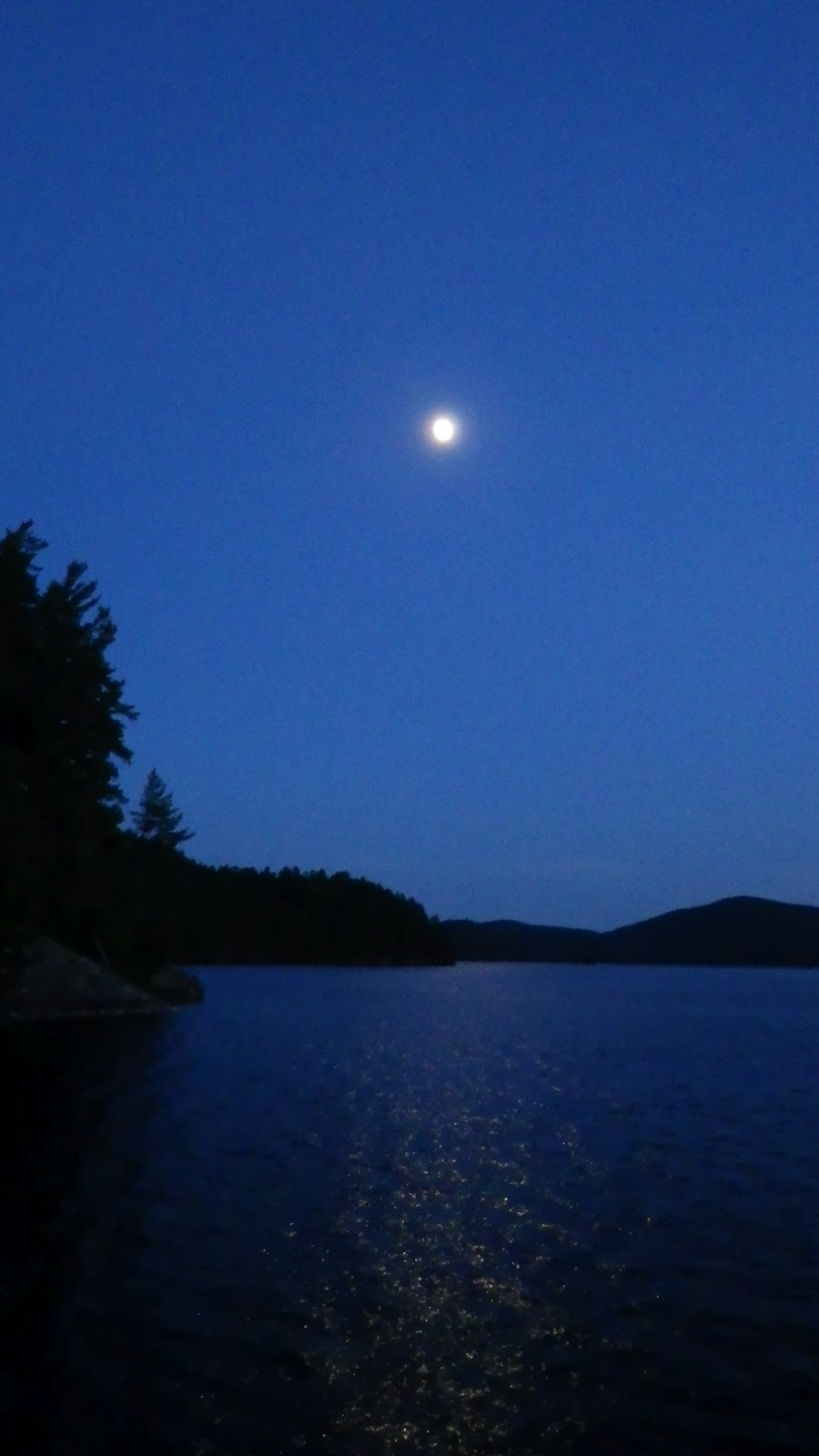
Camping under the moonlight in Lac du Possion Blanc, Quebec

Caterpillar close-up in Great Smoky Mountains National Park, Tennessee, U.S.A.


Sources:
  • Lynas, Mark. 2011.  'The God Species: Saving the Planet in the Age of Humans'. The National Geographic Society, Washington, DC.
  • Egan, Timothy. 2012. 'Nature Deficit Disorder'. New York Times Online (http://opinionator.blogs.nytimes.com/2012/03/29/nature-deficit-disorder/)
  • Louv, Richard. 2005. "Last Child in the Woods: Saving our Children from Nature-Deficit Disorder". Algonquin Books.